
C17 · Textile
Stainless Steel Plates for Textile Industry: 316L/304 Selection and 7 Part Lists
In the textile industry, we have identified 7 parts that use stainless steel: most commonly 316L / 304 / 321, with thicknesses ranging from 1–400 mm.
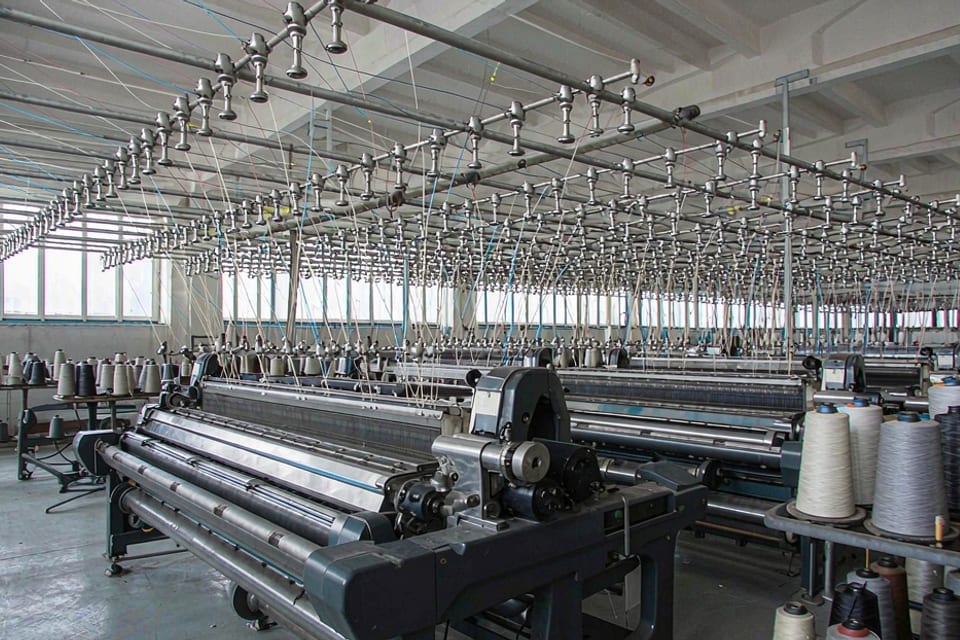
7 parts and selection list
| Part / Component | Recommended grade | Size / Thickness | Surface | Main Failure Modes | Reference Standards |
|---|---|---|---|---|---|
| J-Type High-Temperature High-Speed Dyeing Machine Cylinder | 316L/304/321 | Wall Thickness Approximately 4mm | 2B/ Acid Pickling and Passivation | Chloride SCC: Dye contains Cl⁻, far exceeding the austenitic SCC critical temperature of about 60℃ at 140℃; cracks originate from welds/flanges/HAZ | GB/T 3280;GB/T 150;GB/T 4334 |
| Cylinder Heat Exchanger Tubes | 316L | Tube Wall Thickness 1.0–2.0mm | Pickling and Brightening | Steam Condensate Cl⁻ Concentration + Welding Residual Stress → SCC at Welds | GB/T 151;GB/T 4334 |
| Guide Roll (Core Shaft/Roll Surface) | 304/316L | Roll Surface φ100–400mm; Wall Thickness 2–6mm | Mirror/HL | Dye, Auxiliaries, Acid and Alkali Corrosion; Salt Spray Resistance for 120h without Rusting is a Common Acceptance Line | GB/T 3280; FZ/T 90001 Series |
| Whitening Tank/Bleaching Machine Alkaline Solution Tank | 316L | 2.0–6.0mm | 2B/ Pickling | Chlorine Bleaching + High pH Stress Corrosion | GB/T 3280 |
| Casting Tanks/Piping | 316L/904L | 2.0–6.0mm | 2B/ Pickling | What is the concentration of Cl⁻ in your chroming solution? | GB/T 3280;ASTM A240 |
| Spinning Box, Metering Pumps | 316L | Forged Parts/Plate 5-30mm | Finish/Glazed Surface | Degradation and wear of high-temperature polymers + | GB/T 3280;GB/T 1220 |
| Welding head/netting | 304/316L | 1.0–3.0mm | 2B/Perforating | Water jet brushing + fiber wear + corrosion | GB/T 3280 |
Table containsStandard configurationBased on usage conditions, the same part can switch from 304 to 316L or 2205. —— Explain the conditions clearly, it's easier than specifying grades.
Material selection
- What are the most common grades in this industry? (Click to view)
- Corrosion from chloride ions and salts is the most common source (5/7 hits).
- Welded components need to watch for sensitization and chloride ion stress corrosion cracking (3/7 hits).
- Thickness range 1–400 mm: thin plates are mostly formed parts (consider bending rebound and deep drawing cracks), thick plates are mostly welded structures (consider heat input and sensitization).
Common Issues
Which stainless steel is used most in the textile industry?
Based on these 7 components, 316L (7 hits) and 304 (3 hits) appear most frequently. Specific parts still depend on media and temperature, such as stainless countertops that contact salt water should switch from 304 to 316L.
Which part is the most prone to issues?
How hot does it get at 140℃?
What thickness do you need for this application?
Which grade should we use: 316L, 304 or 321?
What's the cleaning method used?
Applications7
Thickness1–400mm
Grades400/316L