
C29 · Rubber & Plastics
Stainless Steel Plates for Rubber and Plastic Industry: Selection of 304/316 and List of Four Parts
In the rubber and plastic industry, we have organized four parts using stainless steel: commonly used 304 / 316 / 316L, with thickness ranging from 2–300 mm.
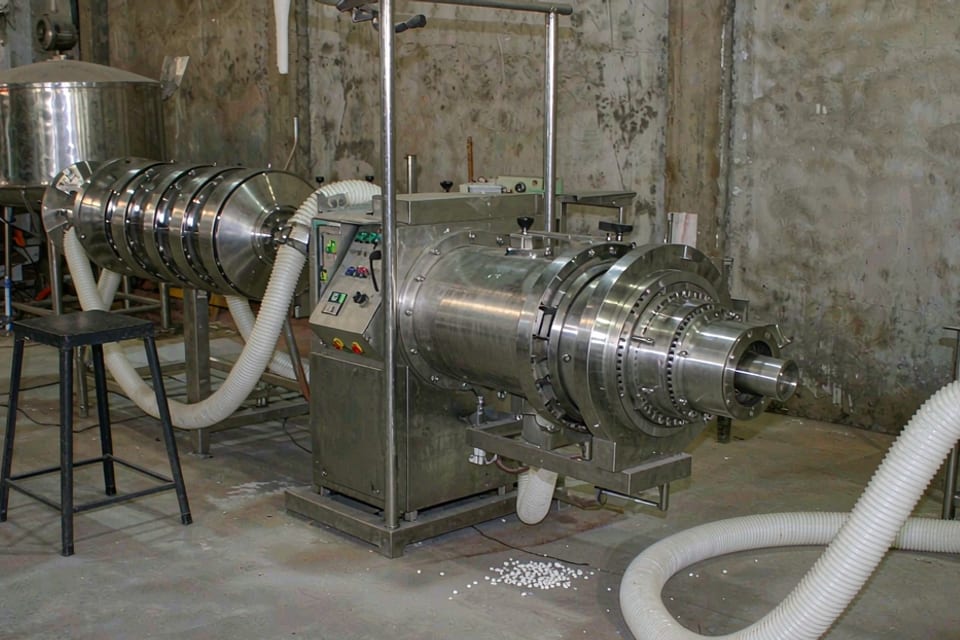
Four Parts and Material List
| Part / Component | Recommended Grade | Specification / Thickness | Surface | Main Failure Conditions | Reference Standards |
|---|---|---|---|---|---|
| Extruder Screw (Corrosion Critical Service) | 304/316 Base Body + Nitrided Layer 0.4–0.7mm + Double Metal PTA 1.0–1.5mm | Screw φ20–300mm | Nitriding / Double Metal Welding / Polishing | PVC/HCl+ Fiberglass/Filler Wear; Nitrided Layer Exposed, Soft Core Rapidly Fails | GB/T 3280;JB/T Screw Standard |
| Extruder Barrel (Corrosion Critical Service) | 304/316 Base Body + Centrifugal Casting Double Metal Liner 2.0–3.0mm | Inside Diameter 20–300mm | Liner / Nitriding / Polishing | Melt Corrosion + Screw Scrapping + Fiberglass Wear | GB/T 3280;JB/T Industry Standard |
| Compounding Mill Rotor/Cavity Wall (Corrosion Resistant Type) | 304/316L | Welding / Liner Board | Welding/Grinding Surface | Corrosion-resistant Additives + High Wear | GB/T 3280; HG/T Rubber Machinery Standards |
| Sulfurized Tank Walls/Walls of Pipes | 304/316L | 2–8mm | 2B/Acid Washed | High-temperature Steam + Sulfides + Condensate Water | GB/T 3280;GB/T 150 |
Inside isStandard Configuration.Different parts in different media, temperatures, and welding methods may require switching from 304 to 316L or 2205—clearing the usage conditions makes it easier than specifying grades directly.
Key Considerations for Selection
- The most common grades used in this industry are 304 (4), 316 (2), and 316L (2)—the numbers in parentheses indicate how many parts they apply to, which can serve as a starting point for quoting and material preparation.
- Wear Parts (Cutting Edges, Liners, Conveying Components) Consider Hardness, Not Just Corrosion Resistance (3/4 Hits).
- Thickness Range 2–300 mm: Thin plates are mostly formed parts (consider bending rebound and deep drawing cracking), while thick plates are mostly welded structural components (consider heat input and sensitization).
Common Issues
Which stainless steel is used most in the rubber and plastic industries?
Based on this total of 4 parts, the most common grades are 304 (4 hits), 316 (2 hits), and 316L (2 hits). Specific to a part still requires looking at the medium and temperature—e.g., stainless steel countertops that contact salt water should switch from 304 to 316L.
What parts are most prone to failure?
By failure description, typical is "Extruder screw (critical service corrosion)": PVC/HCl+glass fiber/stone powder wear; nitrided layer wears through, soft core fails quickly; recommended grade 304/316 base + nitrided layer 0.4–0.7mm + double-metal PTA 1.0–1.5mm, size screw φ20–300mm. This condition suggests specifying medium concentration, temperature, and cleaning method during design.
What thickness should I choose?
Thickness range in the list is 2–300 mm. Thin plates consider forming and surface quality, thick plates consider welding and structural strength; different manufacturers may have different values for the same part, review your drawing or conditions to confirm.
Related materials and adjacent industries
Applications4
Thickness2–300mm
Grades300