
C33 · Metal Products
Stainless Steel Sheets for Metal Products Industry: 304/316L Selection and 15 Item Lists
In metal products industry, we have compiled 15 stainless steel parts used commonly: 304 / 316L / 316, with thickness ranging from 0.025–500 mm.
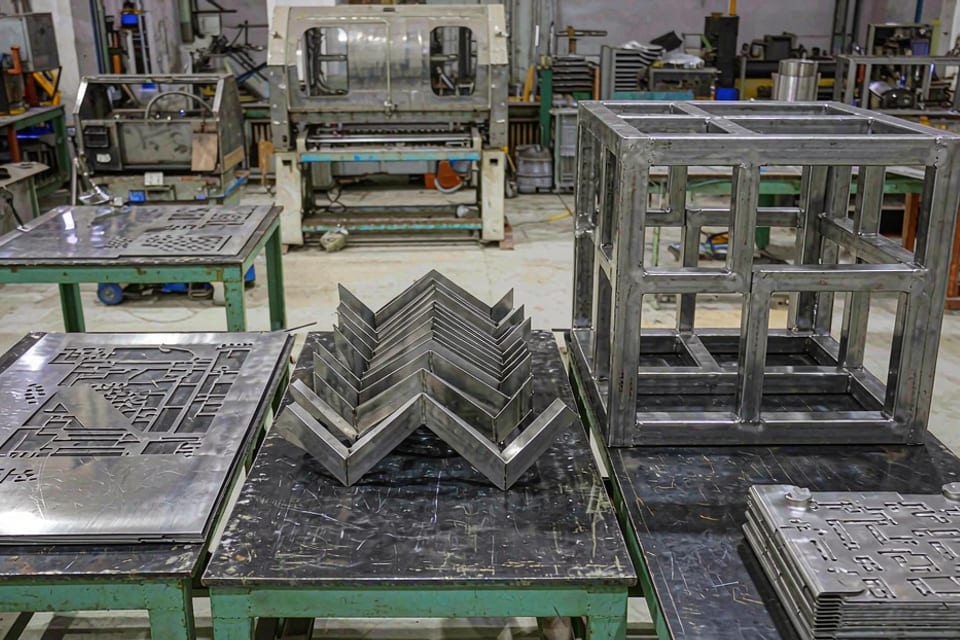
List of 15 parts and materials to select from
| Part / Component | Recommended grade | Specification / Thickness | Surface | Main Failure Modes | Reference Standards |
|---|---|---|---|---|---|
| Welded Flanges DN15–DN600 | 304/304L/316/316L/321 | PN10–PN100 | 2B/Polished/Acid Pickling | Corrosion of Medium + Seal Face Leakage | GB/T 9115;GB/T 3280 |
| Flat Welded Flanges DN15–DN1200 | 304/316L | PN6–PN40 | 2B/Polished | Welding HAZ Corrosion | GB/T 9119;GB/T 3280 |
| Custom Flanges / Equipment Flanges | 316L/904L/2205 | Per Drawing 10–200mm | Polished/Die Cast Surface | Severe Corrosion + High Pressure Seal Failure | NB/T 47008 |
| 90°/45° Elbows (Welded) | 304L/316L/321/310S | DN15–DN1200;Sch5S–160 | Pickling/2B | Erosion Corrosion + Welding Joint HAZ Corrosion | GB/T 12459;GB/T 12771 |
| Straight / Offset Throttles | 304/304L/316/316L | DN15–DN1200 | Bright/Dip | Flow Turbulence + Cl⁻ Erosion | GB/T 12459 |
| Flanged Fittings | 316L | DN15–DN100; Wall Thickness 0.8–2.0mm | Bright/Passivated | Seal Ring Aging + Tube End SCC | GB/T 19228.1;CJ/T 152 |
| Caps/Faceplates | 304/316L | DN15–DN600 | 2B/Passivated | Weld Defects → SCC | GB/T 12459 |
| Hex Bolts M6–M36 | 304(A2-70)/316(A4-70) | M6–M36 | Natural/Degreased | Cl⁻ Erosion/Galvanic Corrosion; Hydrogen Embrittlement | GB/T 3098.6;GB/T 3280 |
| Mechanical Screws/Self-Tapping Screws | 302/304 | M2–M8 | Natural/Degreased | Repetitive Disassembly Wear + Corrosion | GB/T 3098.6 |
| Rod-Formed Nuts | 303 | M4–M30 | Clean | Corrosion Resistance Below 304/316 | GB/T 3098.6;GB/T 1220 |
| Cladding for Exterior Fixings/Bolts | S31608(316) | Diameter ≥ 6mm | Passivation | Atmosphere + Rainwater + Pollutants | GB/T 3098.6;JGJ 133 |
| Disc Spring/Dome Spring | 301/304/316/17-7PH | Sheet 0.1–3.0 mm | Bright/Skived | Stress Relaxation + Fatigue Fracture + Corrosion | GB/T 1972;GB/T 3280 |
| Screw Bearings for Stainless Steel | 440C(9Cr18Mo) | Cup Wall Thickness: 1–10mm | Quenched and Polished | Contact Fatigue + Erosion Pitting | GB/T 308.1;GB/T 1220 |
| Woven Fabric/Woven Net | 304/316L | 20–500 Mesh; Wire Diameter: 0.025–0.5 mm | Shiny | Blockage + Wear + Cl⁻ Corrosion | GB/T 17492;GB/T 3280 |
| V-shaped Filter/Screen Drum Core | 304/316L/904L | Filtration Gap 25μm–2mm | Pickling/Electrolysis | Blockage + Wear + Corrosion | By equipment standards; GB/T 3280 |
Table includesStandard Configuration. Same part may use different grades (e.g., 304, 316L, 2205) based on media, temperature, and welding method—explain conditions to save specifying grades.
Material Points
- Most common grades in this industry are 304 (9), 316L (9), 316 (5)—numbers in parentheses indicate affected areas as a starting point for quoting and material preparation.
- Wear parts (edges, liners, conveyors) need hardness considerations, not just corrosion resistance (hardness checks).
- Welding parts must watch for sensitization and chloride ion stress-corrosion cracking (SCC) (welding concerns).
- Thickness range 0.025–500 mm: thin plates are often formed pieces (consider bending rebound and deep drawing cracks), thick plates are mostly welded structures (consider heat input and sensitization).
Common Issues
What stainless steel is used most in metal manufacturing?
Top 15 parts by total number: 304 (9), 316L (9), 316 (5). Specific to a part still depends on the medium and temperature, e.g., for stainless countertops, contact with saltwater requires switching from 304 to 316L.
Which parts are most prone to issues?
By failure description, typical is "90°/45° elbows (welded)": erosion corrosion + intergranular corrosion at the weld joint; recommended grades 304L/316L/321/310S, DN15–DN1200, Sch5S–160. For this condition, specify medium concentration, temperature, and cleaning method in design.
What thickness should I choose?
Thickness range: 0.025–500 mm. Thin plates for forming and surface treatment; thick plates for welding strength and structural integrity; different manufacturers may have varying values based on your drawings or operating conditions. Recheck with your specific situation.
Related materials and adjacent industries
304Material & Specifications304LMaterial & Specifications316LMaterial & Specifications321Material & Specifications2205Material and SpecificationsAgricultural Food Processing IndustryFood ProcessingFood Manufacturing IndustryFood ManufacturingBeer, Beverage, and Tea Processing IndustryBeverage & Brewing
Applications15
Grades025/500