
B05 · Wastewater & Environmental
Wastewater Treatment and Reuse / Stainless Steel for Environmental Purposes: Select 316/304 and View 11 Part Lists
Wastewater Treatment and Reuse / For Environmental Use We've Compiled 11 Parts Using Stainless Steel: Commonly Used 316, 304, or 316L, Thickness from 2–200 mm.
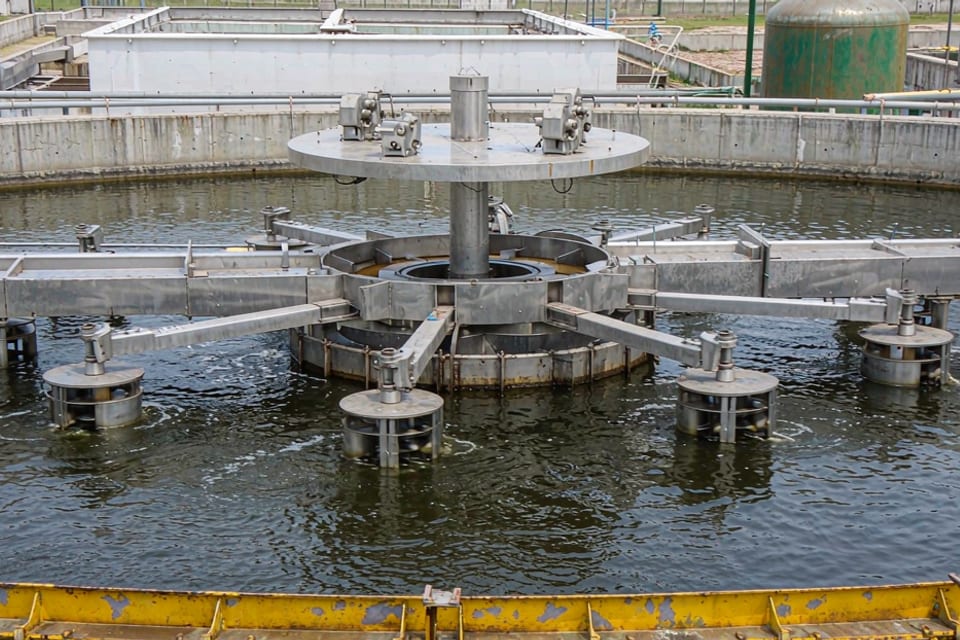
List of 11 Parts and Material Recommendations
| Part / Component | Recommended Grade | Size / Thickness | Surface | Main Failure Modes | Reference Standards |
|---|---|---|---|---|---|
| Groove Trough Teeth Scraper | 304 | Tines 3-8mm | 2B/Working Surface | Gravel Wear + Sewage Corrosion | GB/T 3280;CJ/T 3048 |
| Groove Frame/Grid Bars/Traction Chain | 304 | Material/Plate 5-12mm | 2B/Pickling | Moisture+Hydrogen Sulfide Corrosion+Wear | GB/T 3280 |
| Inflow Fine Grates/Submersible Plates/Shield | 316 (Submersible Main Components) | 2.0–6.0mm | 2B | Long-term underwater immersion + Cl⁻ pitting | GB/T 3280 |
| Centrifugal scraper shaft | 420 (axles)/316LRound pipe | Diameter 50–200mm, Wall Thickness 5–12mm | Surface Finish/2B | Overload Torque + Corrosion Fatigue | GB/T 1220;GB/T 3280 |
| Scrubbing Mud Pump Blades/Shell (Passive Components) | 316 | Forgings/ Sheets 2-10mm | 2B/Face | Sludge Erosion + Corrosion | GB/T 3280;GB/T 2100 |
| Purlins, Gutters, Suction Pipe, Sludge Scrubber | 316/316L | 3–12mm | 2B | Sludge + Wastewater + Hydrogen Sulfide Corrosion | GB/T 3280;ASTM 316L |
| Concentrating Sludge Scraper/Blades/Rods/Water Inlet Board | 316 | 2–8mm | 2B | Sludge Erosion + Corrosion | GB/T 3280 |
| Rod/Support/Flooded Chain | 304 | 2–8mm | 2B | Moist Atmospheric Corrosion | GB/T 3280 |
| Micro Porosity Aeration Fasteners | 316 | M6–M12 | Passivation | Wastewater + Aeration Oxidation + Crevice Corrosion | GB/T 3098.6 |
| Storage Tanks/ Pipelines | 316L | 2–6mm | 2B | Chlorine Sodium/Hypochlorous Acid/Ozone/Acid Corrosion | GB/T 3280 |
| High Chloride Wastewater Pipelines/Heat Exchangers/Membrane Shells | 2205/2507 | 2–20mm | 2B/Acid Cleaning | High Chloride Ion Pitting+Stress Corrosion Cracking | ASTM A240;GB/T 3280 |
See Table forStandard Configuration. Same part may be changed from 304 to 316L or 2205 based on usage conditions—specify conditions, not just grades.
Material Selection Tips
- Common Alloy Grades: 316 (5), 304 (3), 316L (3)
- Corrosion Sources: Chlorides and Salts (3/11 hits)
- Wear Parts: Hardness Considerations (2/11 hits)
- Thickness Range: 2–200 mm (consider bending, deep drawing for thin plates; welding, heat input and sensitization for thick plates)
Common Issues
What Stainless Steel Is Used Most in Water Treatment and Recycling / Environmental Applications?
Among the 11 parts listed, 316 appears most frequently (5 hits), followed by 304 (3 hits) and 316L (3 hits). Specific to a part still depends on the medium and temperature. For example, stainless steel countertops that come into contact with salt water should switch from 304 to 316L.
What parts are the easiest to fail?
By failure description, typical is "high chloride wastewater pipe/heat exchanger/membrane shell": pitting and stress corrosion cracking; recommended grade 2205/2507, size 2–20mm. For this type of condition, it's recommended to specify the medium concentration, temperature, and cleaning method during design.
How thick should the thickness be?
Thickness range in the list is 2–200 mm. For thin plates, consider bending and surface finish; for thick plates, welding and structural strength. Values may vary by manufacturer for the same location, review your drawing or operating conditions.
Related Materials and Adjacent Industries
Case Studies for Similar Operating Conditions
Chemical Engineering & Environmental Equipment
316L / 2205 Thick Plate, Thickness 3–60 mm
For Storage Tanks, Heat Exchangers, and Desulfurization Units, Third-Party Verification Available
Applications11