
B09 · Nuclear Power
Stainless Steel Plates for Nuclear Power: 316L/304L Selection and 6 Part Lists
In nuclear power, we have organized six stainless steel parts: commonly used 316L / 304L / 316LN, with thickness ranging from 2–900 mm.
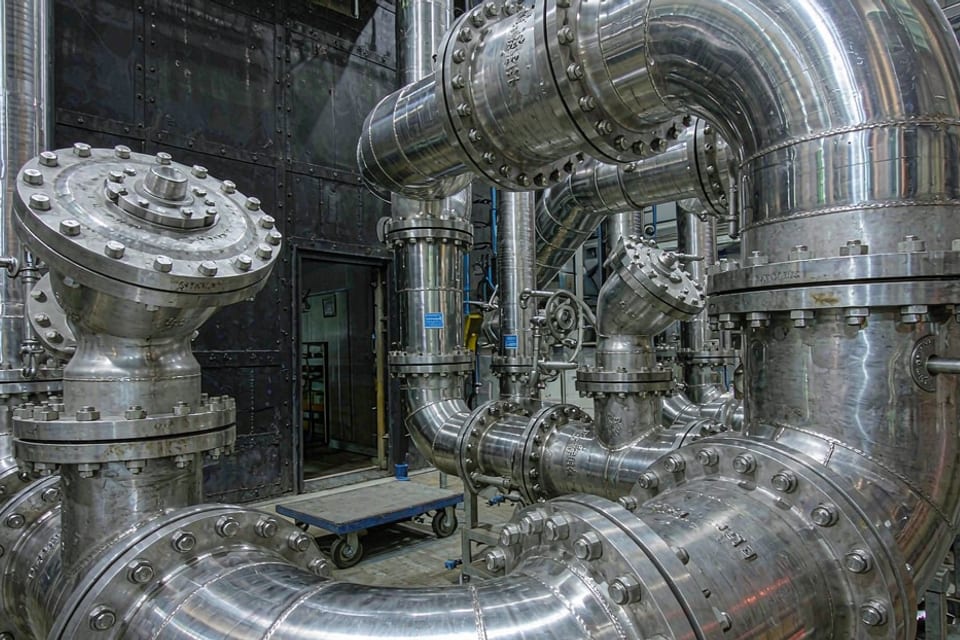
6 Parts and Material List
| Part / Component | Recommended Grade | Size / Thickness | Surface | Failure Modes | Reference Standards |
|---|---|---|---|---|---|
| Reactor Coolant Header Pipe (Hot Section/Cold Section) | 316LN (Forging)/CASS (CF3/CF3M/CF8M) | Diameter φ700–900mm; Wall Thickness 60–100mm (e.g. φ798×75mm) | Forged, Grooved, Cut Edge | Environmental Fatigue: One-Loop Water Chemistry (dissolved oxygen/temperature) may make ASME III fatigue curves non-conservative; CASS aged at 280–320℃ → thermal aging ductility decreases | ASME BPVC III;RCC-M;GB/T 17569 |
| Nuclear Grade Pipes/Bends/Fittings | 304L/316LGrade 316LN | DN15–DN900 | Pickling and Passivation | Cl⁻ Erosion Corrosion + SCC + Fatigue; Boric Acid Leakage Corrosion | ASME III;RCC-M;GB/T 17569 |
| Main Pump Shell | 316L/CF3M Forgings | Large Forgings | Cast Surface / Machined Surface | One-Loop Water Corrosion + Thermal Fatigue + High Cycle Fatigue | ASME III;RCC-M |
| Valves Body/ Stem | 316L/316NG/CF8M/CF3M | DN15–DN600 | Cast Surface / Machined Surface / Passivation | Friction of Sealing Elements + Cl⁻ Erosion + Fatigue + Earthquake Load | ASME III;RCC-M;GB/T 12224 |
| Island Support Hangers / Embedded Parts | 304L/316L | Steel Profiles / Plates 5–30mm | 2B / Acid Washing | Corrosion + Earthquake / Thermal Expansion Load + Fatigue | ASME III;GB/T 3280 |
| Fuel Pool Liners / Grids | 304L | Liners 3–6mm; Grids 2–5mm | 2B / Acid Washing / Passivation | Boric Acid H₃BO₃ + Cl⁻ → Erosion and SCC; Irradiation-Induced Corrosion | ASME III;GB/T 3280 |
Specifications TableStandard Configuration. The same part can be changed from 304 to 316L or 2205 based on the usage conditions —— It's more convenient to specify the conditions rather than just the grade.
Key Points in Selection
- The most common grades used in this industry are 316L (4), 304L (3), and 316LN (2) —— The numbers in parentheses indicate the number of parts involved, which can serve as a starting point for quoting and material procurement.
- What are the most common causes of corrosion (spotting, pitting)? (3/6 hits)
- What about thermal fatigue and oxidation in the high-temperature section? (3/6 hits)
- Thickness range 2–900 mm: thin plates are mostly formed parts (consider bending rebound and deep drawing cracking), thick plates are mostly welded structures (consider heat input and sensitization).
Common Issues
Which stainless steel is used most for nuclear power plants?
Based on the total of these 6 sections, the most frequent is 316L (4 hits), 304L (3 hits), and 316LN (2 hits). Specific to a part still depends on the medium and temperature, such as stainless steel countertops: contact with salt water requires switching from 304 to 316L.
Which parts are most prone to issues?
Based on failure descriptions, typical examples include "reactor coolant header pipe (hot section/cold section)": environmental fatigue: one-loop water chemistry (dissolved oxygen/temperature) may not be conservative; CASS at 280–320°C long-term service → thermal aging ductility decreases; recommended grades 316LN (forged)/CASS (CF3/CF3M/CF8M), specifications φ700–900mm; wall thickness 60–100mm (e.g., φ798×75mm). For this condition, it is recommended to clearly specify medium concentration, temperature, and cleaning method in the design phase.
What thickness should I choose?
Thickness range in the list is 2–900 mm. For thin plates, consider forming and surface quality; for thick plates, welding and structural strength. Different equipment manufacturers may have different values for the same part; review your drawing or operating conditions.
Related materials and adjacent industries
Applications6
Thickness2–900mm
Grades900/316L