
B06 · Seawater Desalination
Select and List 4 Parts for Stainless Steel Desalination
Commonly Used: 2507 / 2205 / 316L, Thickness from 2–15 mm
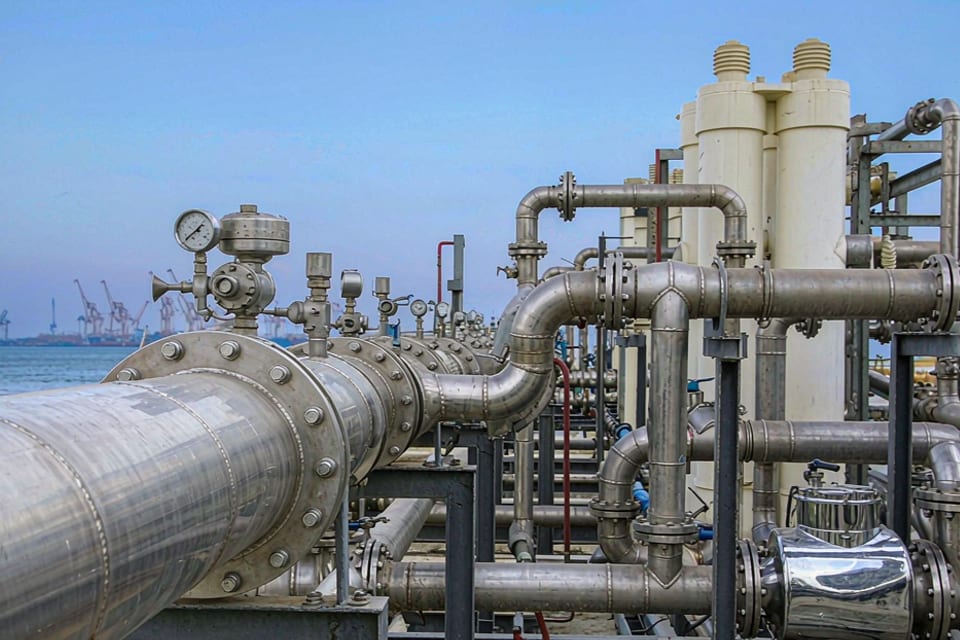
List of parts and materials for four sections
| Section / Part | Recommended designation | Specification / Thickness | Surface | Main Failure Modes | Reference Standards |
|---|---|---|---|---|---|
| RO High-Pressure Pump/Energy Recovery Device | 2507(S32750/1.4410) | Casting/Forging/Tube | Surface/Passivation | High Pressure Sea Water 60–80 bar + Cl⁻ + Cavitation Corrosion | ASTM A240;EN 10217-7;NORSOK M-650 |
| Sea Water Feed Pipes/Vessels | 2507/2205 | Pipe Wall 2–15 mm | Passivation | High Chloride Sea Water + High Speed Scrubbing + Crevice Corrosion | ASTM A240/A789;EN 10217-7 |
| RO Membrane Shell/Filter | 316L/2205/2507 | 2–10mm | Passivation / 2B | High Pressure Sea Water Corrosion + Membrane Contamination | ASTM A240;GB/T 3280 |
| Dechlorinated Water Delivery Pipes | 304L/316L | 2–8mm | 2B / Passivation | Low Chloride Product Water + External Atmosphere | GB/T 3280 |
Table showsStandard Configurations.Different parts may require 304, 316L, or 2205 based on usage conditions and materials, temperatures, and welding methods. Clearing the details saves time.
Key Considerations
- The most common grades are 2507 (3), 2205 (2), and 316L (2). The numbers in parentheses indicate the number of affected areas for quoting and material preparation.
- Common Corrosion Sources: Chlorides and salts (4/4 hits).
- Thickness range: 2–15 mm. Thin plates are mostly formed parts, considering bending rebound and deep drawing cracks; thick plates are mostly welded structural components, considering heat input and sensitization.
Common Issues
Which stainless steel is used most for desalination?
Based on the total of these four areas, 2507 (3), 2205 (2), and 316L (2) appear most frequently. Specific to a part depends on the medium and temperature; for example, stainless countertops that come into contact with salt water should switch from 304 to 316L.
Most Common Problems
Which parts are prone to issues?
Based on failure descriptions, typical examples include "RO high-pressure pump/energy recovery device": High pressure seawater (60–80 bar) + Cl⁻ + cavitation corrosion. Recommended grade: 2507 (S32750/1.4410), specifications: cast/forged/tube. For these conditions, it's recommended to specify the medium concentration, temperature, and cleaning method in the design phase.
What thickness should be selected?
The listed thickness range is 2–15 mm. Thin plates are considered for forming and surface quality; thick plates are considered for welding strength and structural integrity. Different manufacturers may have different values for the same part based on your drawings or operating conditions, so review them accordingly.
2205Related Materials and Adjacent Industries316LMaterial and Specifications304LMaterial and SpecificationsConstruction and InfrastructureConstruction & InfrastructurePower Generation and Supply (including FGD Flue Gas Desulfurization)Power & Energy (incl. FGD)Gas Production and Supply IndustryGas Supply
Applications4
Thickness2–15mm
Grades250