
B14 · Commercial Kitchen
Stainless Steel Plates for Commercial and Institutional Kitchens: 304/316L Selection and 3 Part Lists
In our commercial kitchens, we have organized three stainless steel parts: commonly used 304 / 316L with thickness ranging from 1–3 mm.
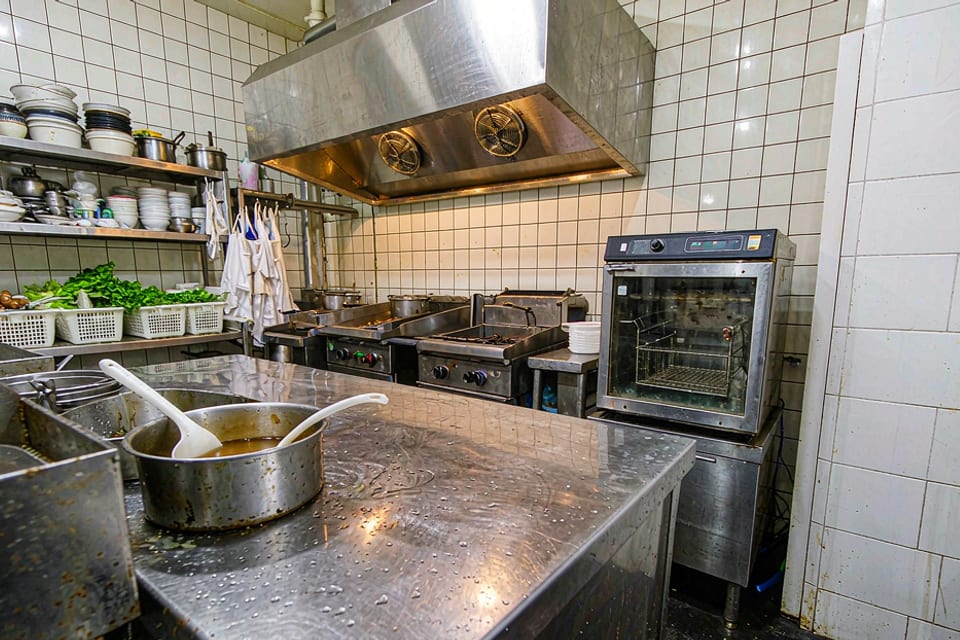
Parts and Material List for Three Areas
| Parts / Components | Recommended Grades | Specifications / Thickness | Surface | Main Failure Modes | Reference Standards |
|---|---|---|---|---|---|
| Commercial Rangehood/Smoke Hood Body | 304 | ≥1.2mm; Oil Mesh ≥0.8mm | Rustproof/Snowflake Sand/Laminate | Oil Stains + High Temperature + Cleaning Agents + Scratches | GB/T 3280;GB 50016 |
| Commercial Dishwasher Interior/Dish Basket/Washing Arm | 304/316L | 1.0–3.0mm | 2B/Ra≤0.8μm | High Temperature 60–85℃ + Detergent + Scale | GB/T 3280;GB 4706.1 |
| Commercial Stove/Worktop/Chef's Stand | 304 | 1.0–3.0mm | 2B / Rustproof | High Temperature + Oil Stains + Cleaning Agents + Load Capacity | GB/T 3280;GB 35848 |
Table Below isStandard Configuration.Different parts of the same type may switch from 304 to 316L or 2205 based on usage conditions —— It’s more convenient to specify usage conditions than directly naming grades.
Key Points in Material Selection
- The most common grade used in this industry is 304 (3) and 316L (1) —— The numbers in parentheses indicate the number of parts involved, which can serve as a starting point for quoting and material preparation.
- High-temperature section also accumulates thermal fatigue and oxidation. Use 310S / heat-resistant castings if necessary (3/3 hits).
- Frequent cleaning and disinfection amplify the risk of cracks and intergranular corrosion (2/3 hits).
- Thickness range 1–3 mm: Thin plates are mostly formed parts (consider bending rebound and deep drawing cracking), thick plates are mostly welded structures (consider heat input and sensitization).
Common Issues
Which type of stainless steel is used most in commercial kitchens?
Based on the total number, the top three are 304 (3 hits) and 316L (1 hit). Specific to a part still depends on the medium and temperature, for example, both stainless countertops can be 304 or 316L depending on contact with saltwater.
What type of parts is most prone to problems?
Based on failure descriptions, typical are "commercial dishwasher inner bowl/washing basket/lavender arm": high temperatures (60–85°C) + detergent + scale; recommended grades 304/316L, thickness range 1.0–3.0mm. For these conditions, it's recommended to specify the medium concentration, temperature, and cleaning method in the design phase.
What thickness should I choose?
Thickness range in the list is 1–3 mm. For thin plates, consider formability and surface quality; for thick plates, welding strength and structural integrity. Different equipment manufacturers may have different values for the same part; review your drawing or operating conditions.
Related materials and adjacent industries
Delivery cases for similar conditions
Kitchenware and cookware manufacturing
Round stainless steel sheets · 0.4–3.0 mm
304 / 201 Stainless Steel Sheets, Deep Drawn Grade, 2B and BA Finish, Thickness 0.4–3.0 mm, Customized by Diameter and Weight
Applications3
Thickness1–3mm